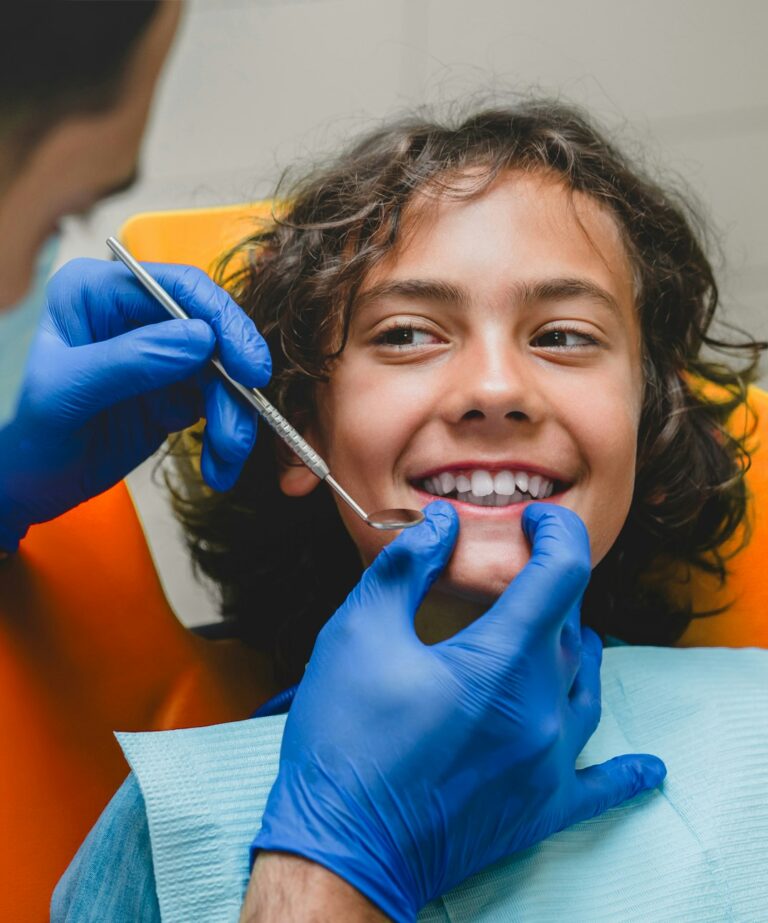

Braces move teeth by applying light, steady pressure through brackets and an archwire. That pressure makes the bone around each root break down on one side and rebuild on the other, so the tooth travels slowly through the jaw into a new position.
What Parts of Braces Actually Do the Moving?
Traditional braces look simple, but each piece has a job. Brackets are the small squares bonded to the front of each tooth. They act like handles, giving the orthodontist a way to grip and steer every tooth on its own. The archwire runs through all of the brackets and is the real engine of treatment, because it is shaped to the ideal arch and constantly tries to return to that shape.
Small elastic ties or clips hold the wire in each bracket slot. Bands or bonded tubes on the back molars anchor the ends of the wire. Depending on the case, extra helpers such as springs, chains or rubber bands add force in a specific direction. That last piece, how rubber bands on braces work, is the part most people find surprising.
At Premiere Orthodontics, metal braces are made of high-grade stainless steel, which is strong and will not rust or corrode. We also offer Clarity ceramic brackets that blend with the natural color of the teeth. Both work on the same principles described here.
What Happens Inside the Bone When Braces Push on a Tooth?
A tooth is not fused to the jaw. It sits in a socket, held by a thin cushion of fibers called the periodontal ligament. That ligament is what makes tooth movement possible.
When an archwire presses a tooth in one direction, the ligament on the side the tooth is moving toward gets squeezed and the ligament on the trailing side gets stretched. The body responds to both signals. On the pressure side, specialized cells called osteoclasts gradually remove bone, which opens room for the root to move. On the tension side, cells called osteoblasts lay down new bone to fill the space the root just left behind.
This process is called bone remodeling, and it is the same natural turnover that keeps every bone in the body healthy. Braces simply guide where it happens. Because the tooth is carried along by living tissue rather than forced through it, the change is stable once the new bone has matured, which is also why a retainer is needed while that bone firms up.
It also explains why teeth feel slightly loose during treatment. Life with braces usually includes a little tooth wiggling while the teeth and gums adjust, and teeth stabilize once they reach their final position and retention begins.
Why Is Light, Continuous Force Better Than Strong Force?
It seems logical that pushing harder would move teeth faster, but the opposite tends to be true. Heavy force can squeeze the ligament so tightly that blood flow on the pressure side is cut off. When that happens, the bone cells that should be clearing a path cannot do their work, and movement stalls until the body catches up. Too much force can also make teeth sore for longer than necessary.
Modern archwires are designed to avoid that problem. Many are made of heat-activated or flexible alloys that deliver gentle pressure over a long period instead of a hard push that fades quickly. That steady, low-level force keeps the remodeling process going day after day. It is a big reason braces today feel more comfortable than the braces many parents remember.
How Do Braces Fix Crowding, Gaps and Bite Problems?
Different problems call for different kinds of movement, and braces can produce nearly all of them. Tipping tilts the crown of a tooth. Bodily movement slides the whole tooth, crown and root together. Rotation turns a twisted tooth around its long axis. Intrusion and extrusion move a tooth up into or down out of the bone. Torque angles the root itself.
Combining these movements lets an orthodontist straighten crowded teeth, close spaces, line up the midline and correct how the upper and lower jaws meet. The common orthodontic issues we treat range from overbites and underbites to crossbites, open bites and crowding. Bite corrections often add elastics between the upper and lower teeth so the jaws work together, not just the teeth.
| Movement | What it does | Common use |
|---|---|---|
| Tipping | Tilts the crown of a tooth | Early alignment of crowded teeth |
| Rotation | Turns a tooth around its long axis | Straightening twisted front teeth |
| Bodily movement | Slides the crown and root together | Closing spaces and gaps |
| Intrusion or extrusion | Moves a tooth up or down in the bone | Leveling the bite and gum line |
| Torque | Changes the angle of the root | Finishing details of a stable bite |
What Do Adjustment Visits Add to the Process?
As teeth move, the archwire gradually relaxes toward its ideal shape and does less work. Regular check-ups keep the process on track. With metal braces, patients usually visit every 6 to 8 weeks, depending on the plan, and we may replace the archwire and adjust a bracket or two at those appointments.
Treatment usually moves through stages. Early wires are thin and flexible to level and align the teeth. Later wires are thicker and stiffer so the orthodontist can control root position and close spaces. Final wires, sometimes with small bends, fine-tune how the teeth meet. Between visits, DentalMonitoring lets you send photo updates from your phone so Dr. Battle can confirm progress without an extra trip to the office.
How Do Custom Brackets and Digital Planning Affect Tooth Movement?
Every bracket carries a built-in angle that tells the wire how to position that tooth. On standard brackets, those angles are designed for an average tooth. Premiere Orthodontics uses custom braces with brackets that are 3D-printed for each individual tooth and placed with indirect bonding, a method that helps position every bracket precisely. This orthodontic technology is designed to support more precise tooth movement with fewer adjustments.
Planning starts with a TRIOS intraoral scan in place of putty impressions, and the scan can preview the result you could reach before treatment begins. When the bone, jaw joints or airway need a closer look, we use PreXion cone beam 3D imaging. Dr. Battle is a board-certified orthodontist and a speaker and clinical expert for custom digital braces, so this planning step is central to how he treats.
How Long Does It Take for Braces to Move Teeth?
Most people feel pressure within the first few days, and small changes, especially in crowded front teeth, often become visible within the first couple of months. Full results take longer, because roots need time to travel and bone needs time to rebuild around them.
Full treatment typically runs 12 to 36 months on average, depending on oral health, the severity of the case and how closely you follow instructions such as wearing your rubber bands. Missed appointments, broken brackets and skipped elastics can make a plan run longer than expected.
Frequently Asked Questions
Do braces hurt when they move teeth?
Getting braces placed does not hurt, because the brackets are simply bonded to the teeth. You may feel minor soreness during the first week or two as the teeth and gums adjust, and an over-the-counter pain reliever such as Tylenol can help. Softer foods make that week easier.
Why do my teeth feel loose with braces?
A little looseness is a normal sign that the bone around the roots is remodeling. Once teeth reach their planned position and you move into the retainer phase, they firm up again. If one tooth feels very loose and it worries you, call the office so the team can check it.
Do clear aligners move teeth the same way?
Yes. Aligners push on the teeth with plastic trays rather than brackets and wires, but the biology underneath is the same bone remodeling. Each new tray applies the next small, planned movement.
Can teeth move back after braces?
Yes. Teeth tend to shift throughout life, which is why a retainer is the final phase of treatment. Wear it on the schedule Dr. Battle gives you to protect your result.
See How Braces Would Move Your Teeth
The clearest way to understand your own tooth movement is to see your own scan. Metal, ceramic and clear options are all part of braces in Orlando at Premiere Orthodontics. Request your complimentary exam at our Waterford Lakes or Winter Springs office, where Dr. Battle can show you a digital preview of your result.