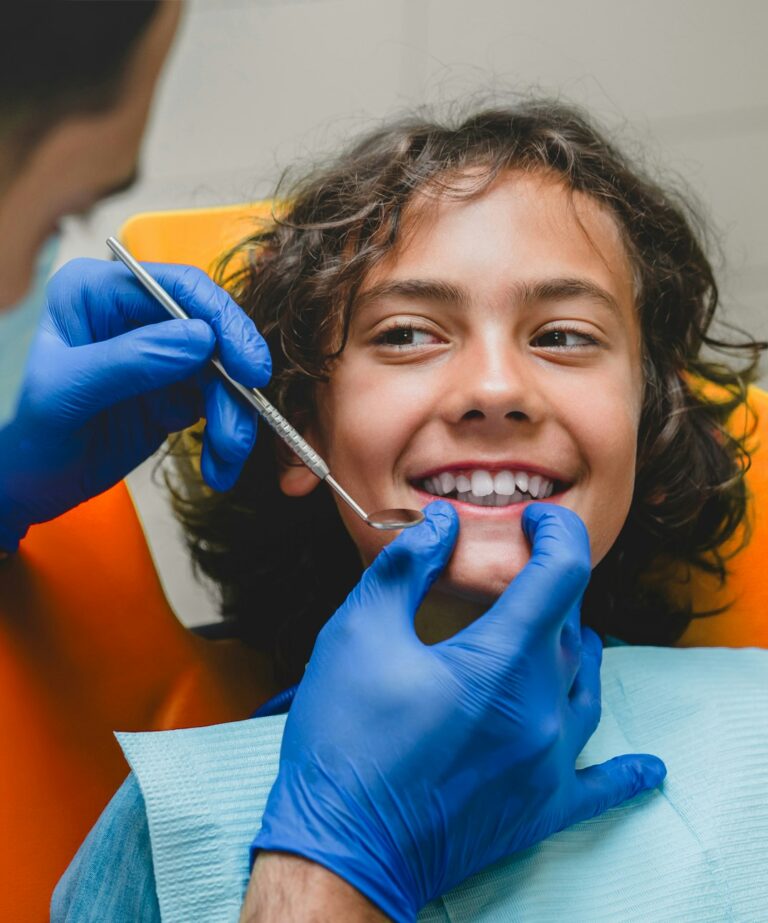

Getting braces put on is a comfortable, step-by-step appointment. The teeth are cleaned and dried, brackets are bonded with a tooth-colored adhesive and set with a curing light, and the archwire is threaded through and secured. The bonding process does not require shots or drilling.
How Do You Get Ready for Your Braces Appointment?
A little preparation makes placement day easier. Brush and floss well that morning so the teeth are as clean as possible, since brackets bond most reliably to clean enamel. Eat a regular meal beforehand, because your teeth may feel tender later in the day and a soft dinner will be more appealing than a big one.
It also helps to stock up before you come. Pick up soft foods, an over-the-counter pain reliever you already use, and a floss threader. Some patients have spacers placed about one to two weeks earlier to open small gaps between the back teeth for molar bands. If that is part of your plan, it helps to know what spacers before braces do and how they feel.
If you would rather not wait for a separate appointment, Premiere Orthodontics offers Same Day Braces. When we call to schedule your first visit, you can let us know you are interested in a Same Day Start, and we will reserve time to begin treatment at your complimentary exam.
What Happens Step by Step When Braces Go On?
Every practice has its own routine, but the core steps are much the same. First, the teeth are polished and dried. A cheek retractor holds the lips and cheeks gently out of the way so the teeth stay dry, because moisture weakens the bond.
Next, a mild conditioning solution is painted on the spot where each bracket will sit. It prepares the enamel surface so the adhesive can grip. After a rinse and another round of drying, a primer goes on the same area.
Then the brackets are placed. A small amount of tooth-colored adhesive goes on the back of each bracket, the bracket is pressed into position, and any excess is cleaned away. A blue curing light hardens the adhesive in seconds. Bands or bonded tubes are fitted on the back molars to anchor the ends of the wire.
Finally, the archwire is threaded through every bracket and secured with small elastic ties or clips, and the ends are trimmed so nothing pokes your cheeks. Put simply, we are bonding brackets to your teeth and attaching archwires to them, and that part does not hurt. It is one of the first life with braces questions most patients ask.
How Are Custom Brackets Placed With Indirect Bonding?
At Premiere Orthodontics, custom bracket placement starts with planning. A TRIOS digital scan, with no putty impressions, builds a 3D model of your teeth and bite. Our custom braces use brackets that are 3D-printed for each individual tooth, and they are placed with indirect bonding.
With indirect bonding, bracket positions are planned on the digital model first. The brackets are then carried to your teeth in a custom tray, so they can all be set in their planned spots together instead of one at a time by eye. This orthodontic technology helps maximize the accuracy of bracket placement, which supports more precise tooth movement and fewer adjustments later.
Does Getting Braces Put On Hurt?
The appointment itself is not painful. The most common complaints are a tired jaw from keeping your mouth open and the odd feel of the cheek retractor. The bonding itself does not require shots or drilling.
Soreness usually starts a few hours later, once the archwire begins to apply pressure. Minor soreness during the first week is normal as the teeth and gums adjust. An over-the-counter pain reliever such as Tylenol can help, and it should subside after the first week or two. The inside of the cheeks and lips may also feel rubbed while they toughen up. Orthodontic wax over a bracket that catches will help, and a few first week with braces tips make that adjustment period easier.
What Should You Know Before You Leave the Office?
Good habits start on day one. When your braces go on, our treatment coordinator will show you how to brush and floss properly. That includes brushing in small circles around each bracket and using a floss threader to pass floss under the archwire.
It also helps to know how orthodontic wax works and what counts as an orthodontic emergency. Most problems, like a poking wire or a loose bracket, are not urgent and can be eased with wax until your next visit. With metal braces, you can also choose from a variety of colors for your ties at adjustment appointments.
| Stage | What happens | What you will notice |
|---|---|---|
| Prep | Teeth polished, dried and held dry with a cheek retractor | Pressure from the retractor, no pain |
| Conditioning | Enamel prepared where each bracket will sit | A mild sour taste for some patients |
| Bonding | Brackets set with adhesive and a curing light | A bright blue light, no discomfort |
| Wire | Archwire threaded and secured with ties or clips | A snug feeling as the wire engages |
| Coaching | Brushing, flossing and wax instructions | Time to ask questions before you leave |
While you are still learning which foods to skip, it is easy to bite into something hard without thinking, and that is the most common way a bracket pops loose. If one does come off, save it in a small bag if you can find it and call the office. Our emergency guidance explains that a loose bracket is not an urgent situation, but you should plan to be seen within the week so treatment stays on schedule.
What Can You Eat After Getting Braces Put On?
Stick with soft foods for the first few days. Options like pasta, tuna, mashed potatoes or soup work well during the first week, and you can add harder foods back as soon as you feel up to it. Cold treats such as milkshakes and frozen yogurt can feel soothing too.
From day one, avoid foods that are chewy, sticky, crunchy or hard, such as caramel, gum, popcorn, ice, nuts and hard pizza crusts. Foods you bite into with your front teeth, like apples and corn on the cob, should be cut up first. Planning what to eat the first day with braces ahead of time makes that first evening easier.
After placement, regular check-ups keep treatment moving. With metal braces, patients typically visit every 6 to 8 weeks depending on the plan, and DentalMonitoring lets you send photo updates from your phone between visits.
Frequently Asked Questions
How long does it take to get braces put on?
Placement takes longer than a regular check-up, because every bracket is bonded and the wire is fitted in the same visit. Your team can tell you how much time to plan for when they schedule you.
Can I go to school or work after getting braces?
Most people can return to normal activities the same day. Your teeth may feel tender by evening, so a soft dinner and an over-the-counter pain reliever you already use can make the first night easier.
Is getting ceramic braces put on any different?
The steps are the same. Clarity ceramic brackets are bonded the same way as metal brackets, they simply blend with the natural color of your teeth.
Can I get braces on the same day as my consultation?
Yes. Premiere Orthodontics offers Same Day Braces. Let us know you are interested in a Same Day Start when you schedule, and we will reserve time to begin treatment at your complimentary exam.
Start Your Braces at Premiere Orthodontics
Metal braces, Clarity ceramic braces and clear aligners are all options for braces in Orlando at Premiere Orthodontics. When you are ready, schedule a new patient exam at our Waterford Lakes or Winter Springs office, and ask about a Same Day Start if you would like to leave with braces on.